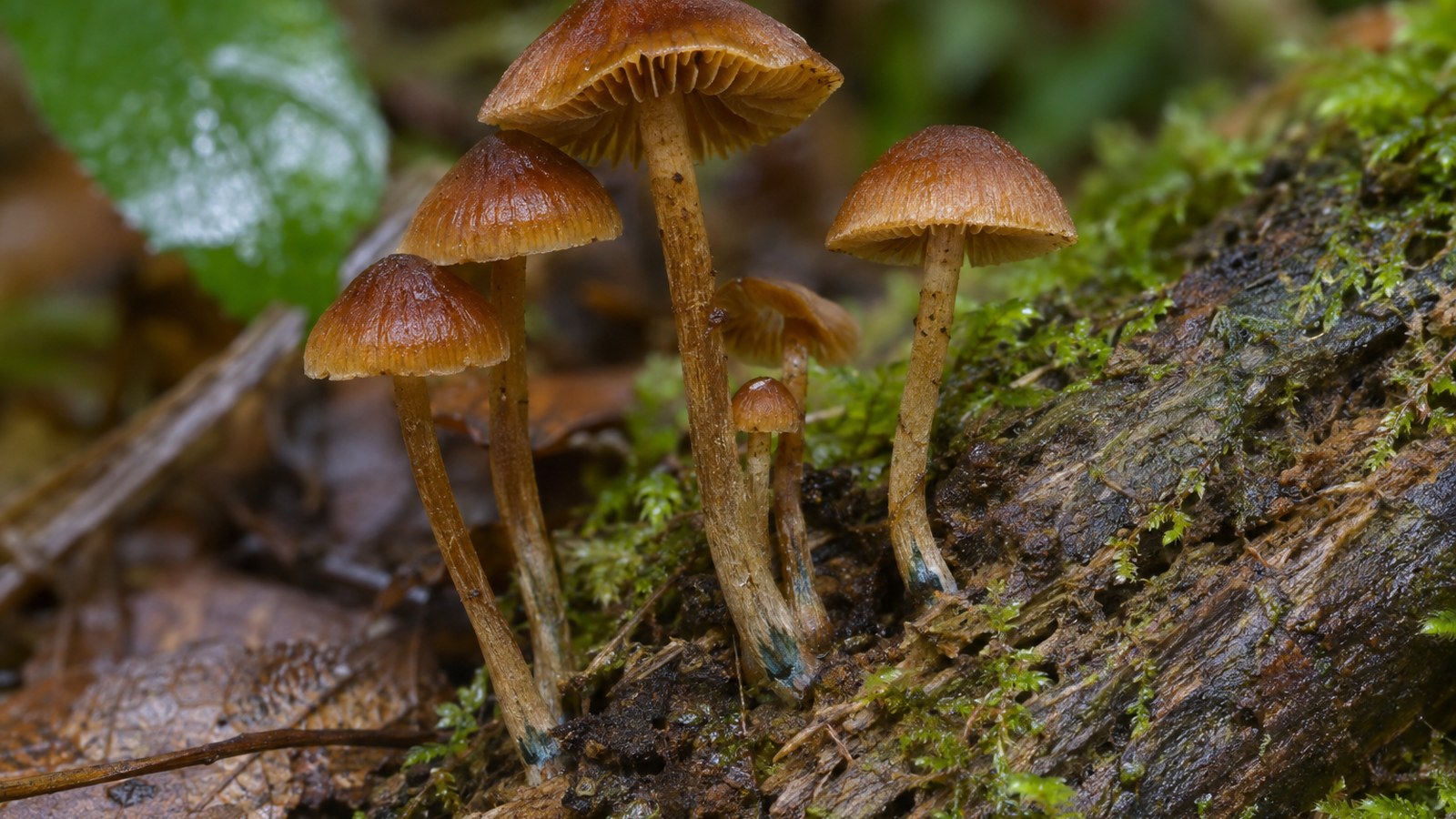
Picture a small brown mushroom poking out of the moss on a decaying palm log in a central Florida wetland. Nothing about it looks special. Yet scientists say this little fungus, Galerina indica, is the first species ever found to make both psilocybin, the compound behind “magic mushrooms,” and amatoxin, one of the deadliest mushroom poisons known.
- Galerina indica, now nicknamed the “dark magic mushroom,” is the first known species to produce both psilocybin and amatoxin.
- Students in a University of Florida mycology lab found it growing on moss-covered palm trunks in a central Florida wetland.
- Amatoxin can shut down the liver and kidneys, and researchers say plainly that this mushroom should never be eaten.
A Surprise Hiding in Plain Sight
The discovery came out of a University of Florida mycology lab, where students set out to study “little brown mushrooms,” a big group of small, look-alike fungi. The goal was to find species that produce amatoxins. One relative, Galerina marginata, or the funeral bell, already carries the toxin. The team gathered several Galerina specimens, including G. indica.
The mushroom’s flesh turned blue when handled. That bruising is sometimes linked to psilocybin, and a chemical analysis confirmed the hunch. Andrew Kunik, a fungal biology researcher and one of the study’s authors, has said no mushroom in any group was previously known to make both compounds at once. He called the find remarkable.
Two Worlds Meet in One Fungus
Until now, psychedelic mushrooms and deadly amatoxin mushrooms sat in different camps. The species that make each compound are only distantly related. Kunik has described humanity’s long fascination with mushrooms as framed by two groups: the ones that cause trips and the ones that kill. G. indica blurs that line.
How did it end up with both? The researchers think the mushroom already made amatoxins and later picked up psilocybin genes through horizontal gene transfer, in which an organism picks up genes from a different organism rather than a parent. It’s common in bacteria and part of how antibiotic resistance spreads.
The team also suspects the pairing works as a defense. A fungus that’s both mind-altering and poisonous makes an unappealing snack for hungry animals, people included.
Why This Mushroom Can Kill You
The researchers didn’t test G. indica on humans, but amatoxin is the same poison found in the Death Cap, Destroying Angel, Fool’s Mushroom, and Autumn Skullcap. It’s responsible for more than 90% of mushroom poisonings worldwide.
The toxin stops your cells from making the proteins they need to work and repair themselves. Cells die, and organs, mainly the liver and kidneys, shut down. The timeline is cruel. Six to 12 hours after eating, people get nausea, cramps, and signs of dehydration. Then they seem to get better while the liver keeps taking damage. Liver and kidney function decline, and death can follow within three to seven days.
There’s no antidote. Doctors can give charcoal to limit the toxin’s effects if a patient gets help early, and a few medicines may help protect the liver. In advanced cases, a liver transplant may be the only option. Amatoxin poisonings are fatal in 10% to 20% of patients.
The Psilocybin Won’t Protect You
Some people might assume the psychedelic side makes this mushroom less dangerous. It doesn’t. In the body, psilocybin turns into psilocin, which activates serotonin receptors and changes how brain regions communicate.
But psilocybin has its own risks. It can cause nausea and vomiting, and its toxicity could lead to breathing problems or a heart attack. People with altered thinking can also do dangerous things. With this mushroom, any trip comes bundled with a poison that attacks your organs.
Leave Little Brown Mushrooms Where They Grow
G. indica looks like hundreds of other small brown species, and that’s the real danger. Blue bruising isn’t a safety signal either, since this mushroom bruises blue and still carries a deadly toxin. One of the study’s authors puts it bluntly: don’t eat this mushroom.
The find shows how much strange chemistry can hide in ordinary-looking fungi. For the rest of us, the lesson is simple. Admire wild mushrooms, photograph them, and leave them alone. If someone eats a wild mushroom and starts feeling sick, get medical help right away, because early treatment gives doctors the best shot against amatoxin.