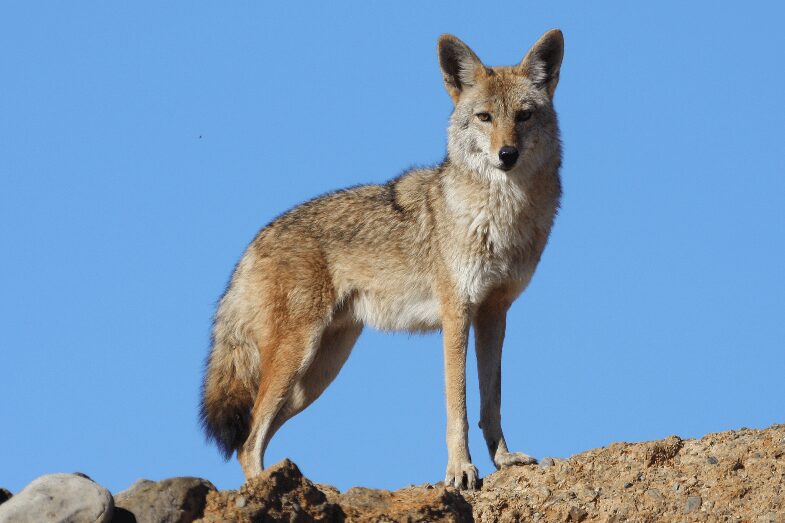
A coyote did what no inmate ever managed to do: survive the waters of San Francisco Bay and reach Alcatraz Island. Captured on video by a tourist on January 11, this furry visitor became the first of its species ever documented setting foot on the famous former prison. The footage shows the exhausted animal paddling through the frigid water before climbing onto the rocky shore, shivering and barely able to stand.
- This marks the first time a coyote has been documented on Alcatraz, with the animal likely swimming over a mile to get there.
- Experts speculate the canine was most likely trying to find a territory of its own, possibly coming from the pack that lives in the Coit Tower area where green space is limited.
- The coyote has ready food sources on the island including rodents, birds, and their eggs, though Alcatraz is a noted sanctuary for nesting shorebirds precisely because it lacks mammalian predators.
How the Incredible Sighting Happened
It was a late Sunday afternoon like any other on San Francisco’s Alcatraz Island. The day was winding down, and Aidan Moore, a guest relations employee for Alcatraz City Cruises, was at the dock helping visitors disembark. Suddenly, one of the tourists approached him, wide-eyed: They had just seen a coyote swimming to shore, something that has never been recorded before.
“I didn’t believe them to start with,” Moore, who has been working on the island for the past two and a half years, told reporters. But the guest insisted they had the video to prove it. They held up their iPhone to show him the screen, and sure enough, there it was: a coyote paddling through the water and eventually reaching the craggy coast on the southern edge of the island near the Agave Trail, panting and shivering.
Moore reported the coyote sighting over the radio, prompting what he said was an ultimately fruitless search by rangers with the National Park Service, which manages Alcatraz as part of the Golden Gate National Recreation Area.
Experts Weigh In on Why It Happened
Julian Espinoza, a spokesperson for the Golden Gate National Recreation Area, confirmed the coyote was the first of its species to be documented visiting the island. “Coyotes can be commonly seen throughout our San Francisco and Marin parklands but never before on Alcatraz,” Espinoza wrote. “This was the first time our park biologists observed anything like this.”
Conservation scientist Christine Wilkinson says the most likely explanation is that the animal was a young coyote seeking new territory during mating season, possibly from the Coit Tower area, where open space is limited.
Though coyotes usually seek out new territory in the fall through early winter, an individual doing so in January isn’t unheard of, Wilkinson said, especially since it’s now mating season for the animals. Interstate 280 can “pose a major barrier for coyotes trying to disperse south,” she said. Recent studies have shown vehicle strikes are a leading cause of mortality for the animals, so taking to the water might not seem like such a bad idea to them.
The coyote most likely arrived on Alcatraz from San Francisco, which is the closest potential point of origin. If so, that’s a serious swim. We’re talking about 1½ miles across cold, choppy waters with strong tides.
Will the Coyote Survive on Alcatraz?
In the video, the coyote crawls out of the water and struggles to get his footing once on the rocks. “He can barely make it,” said Janet Kessler, a self-taught naturalist who has been documenting coyote behavior in San Francisco for about 20 years. “He’s depleted. He is shivering. He is cold.”
Like Moore, Wilkinson was concerned about the fate of the coyote, which looked “pretty weak” to her. But she noted the animals are tough and adaptable, with plenty of food options available on the island, including rodents like rats or mice.
To survive and potentially return, the coyote must hydrate, nourish, and warm itself. While there’s no running water on Alcatraz, water can be obtained from seasonal rains, and there has been plenty of heavy rain recently. The island is full of rats, mice, banana slugs and birds, so if the coyote survived the first few nights, it has a good chance of making it.
Kessler believes the animal may have felt interspecies population pressure in the city and needed to find a new territory. After two decades studying the species, Kessler has learned they can adapt to many environments, and this one could potentially adapt to Alcatraz.
Concerns for Alcatraz’s Nesting Birds
Moore said it’s currently nesting season for the birds on Alcatraz, including western and California gulls, cormorants and snowy egrets. Birds of prey that used to be on the island have since disappeared due to suspected avian flu. With the lack of predators on the island to manage the population, the coyote could easily scout out eggs or chicks if it had the energy.
Still, the predatory hawks that used to feed on those birds haven’t returned this year, Moore said, attributing their absence to avian flu. So even if the coyote does remain on the island and start hunting, he thinks it’s unlikely to affect the local bird population too much.
Could There Be More Coyotes Coming?
Moore wonders whether the coyote may establish a pack like the one that swam to Angel Island, which was either pregnant when it made the trip or called across the bay until a mate joined it.
“The swim to Alcatraz is difficult even for a person in peak physical shape,” Espinoza wrote in an email. “We were as surprised as anyone to see that video of the coyote swimming ashore.” The Park Service has received no other reports of coyotes on the island since the sighting and isn’t sure what happened to the animal.
Kessler advises people to keep their distance if they see the coyote. “Leave the coyote alone because this is it doing what it does best,” she said. After two decades studying the species, Kessler has learned they can adapt to many environments. “They are survivalists,” said Kessler. “They’re always testing their limits, and that’s why they continue to expand.”