Should AI-generated museum art appear alongside the works of the masters? Most would think that should not be the case, but one artist snuck a piece in.
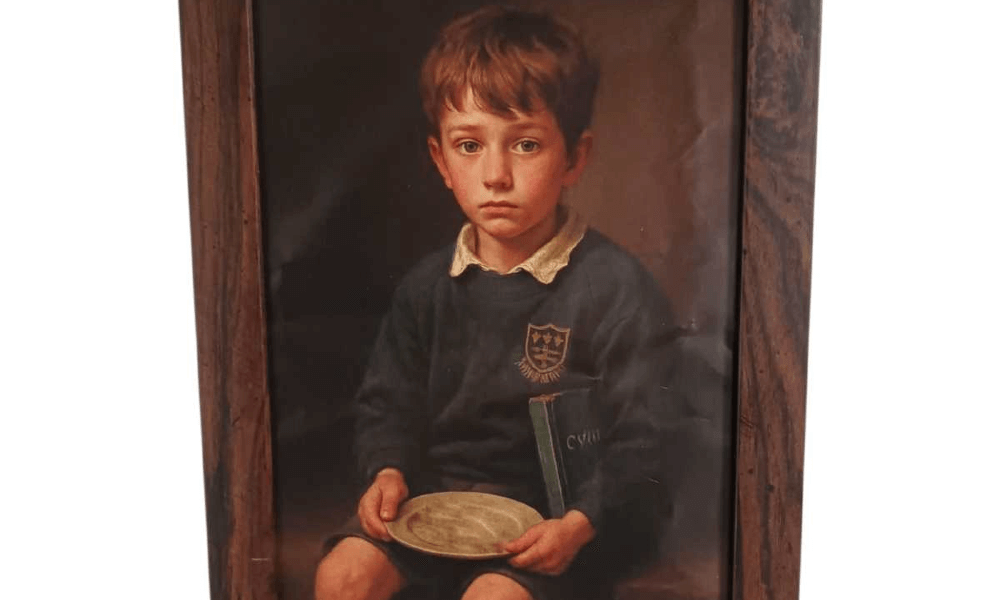
A mystery artist named Elias Marrow walked right into the National Museum Cardiff and hung up his own AI-generated print on the wall. The piece, called “Empty Plate,” shows a Welsh schoolboy holding a book with an empty plate in his lap. It stayed up for several hours while hundreds of people walked past before someone finally asked the staff about it. Turns out, nobody working there had any idea how it got there or when it showed up. The museum confirmed someone placed it without permission and took it down.
Elias Marrow guerrilla art hits several museums
Marrow has pulled similar stunts before at the Tate Modern and the Bristol Museum as an art prank. He says he’s questioning how museums decide what’s worth showing and what happens when art appears outside their approval system. The whole thing sparked a debate about AI artwork and the controversy over whether it belongs in museums at all. Considering the Empty Plate AI print was seen at the museum in Wales by a few hundred people before its removal, means it didn’t seem out of place or wasn’t noticed by museum staff.
The AI-generated museum art went the extra mile
Marrow didn’t simply create a guerrilla art installation at the museum; he made it look as official as possible with a plaque hanging next to it to describe the piece and credit the artist. After several hours of hanging at the National Museum Cardiff, the unauthorized artwork was taken down. Marrow, and his history of creating these items and hanging them, put in some work to make this AI artwork look real. He sketched out the image before rendering it using AI. Once he made the prints, the artwork and plaque were installed at the museum, in secret.
A tourist caught on to the AI-generated museum art
The artwork was described as of poor quality by a tourist from Ireland who wondered why it was hanging on the wall without being labelled as AI. The plaque next to the piece simply read “digital print on paper, custom-made frame. Limited edition, signed. On loan from the Artist, 2025.” This might be enough to give some onlookers a clue that it wasn’t supposed to be there, and it took at least one museum guest to alert the staff to the existence of the piece before they realized the hoax that took place.
is the art world broken?
It seems Marrow’s goal was to show that public viewership and interest could be positive, even for AI-generated museum art. This prank also shows how public entities choose what is of value and what isn’t. If art doesn’t fit a certain quality or perspective, it can often be overlooked. Still, some might not consider artwork generated using AI technology to be of any value. Many art lovers would likely prefer their art to be completed by actual artists, not by computers running software based on inputs.
Should AI-generated museum art be included in regular galleries?
Many art lovers might not want to see computer-generated artwork on display in museums, but there could be a place in the world for such artwork to be presented to the public. Some artists might lack the actual artistic talent to put their images on canvas, but might be able to express them through a computer program, allowing the AI system to generate their artwork. This type of art could be interesting and have a place, but it should remain separated from human-created artwork.
Why should the two types of art remain separate?
Allowing AI-generated museum art to receive the same attention and audience as computer-generated art dilutes the actual talent that goes into the artwork created by humans. Part of the beauty of the world is the art that can be created, and it takes talented people to do that. Paintings and sculptures aren’t worth millions of dollars because they were completed using a computer program, but because specific, highly-talented, and dedicated artists completed them by hand. In some cases, the artwork takes years to complete, not minutes, which could be the case with AI-generated museum art.
Marrow pulled off another prank, but that prank has the art world talking. To be certain, the National Museum Cardiff will be on high alert for future pranks of this kind. Expect Marrow to appear again at other museums; he doesn’t seem to be done proving his point.