Two legends of the puzzle world recently sat down for a conversation that’s got people talking about space missions, civilization, and colorful cubes. Alexey Pajitnov, the genius behind Tetris, told Ernő Rubik himself that the Rubik’s Cube deserves a spot among humanity’s greatest achievements and should be sent into space as proof of what we’re capable of.
- Alexey Pajitnov calls the Rubik’s Cube “the symbol of modern civilisation” and wants it included on interstellar space objects.
- This rare meeting between the Tetris and Rubik’s Cube creators happened during the launch of the Rubik’s Tetris Cube collaboration.
- Pajitnov explained that Tetris is too complicated for space, requiring computers and interfaces, while the Rubik’s Cube is perfectly simple and self-contained.
When Two Gaming Legends Meet
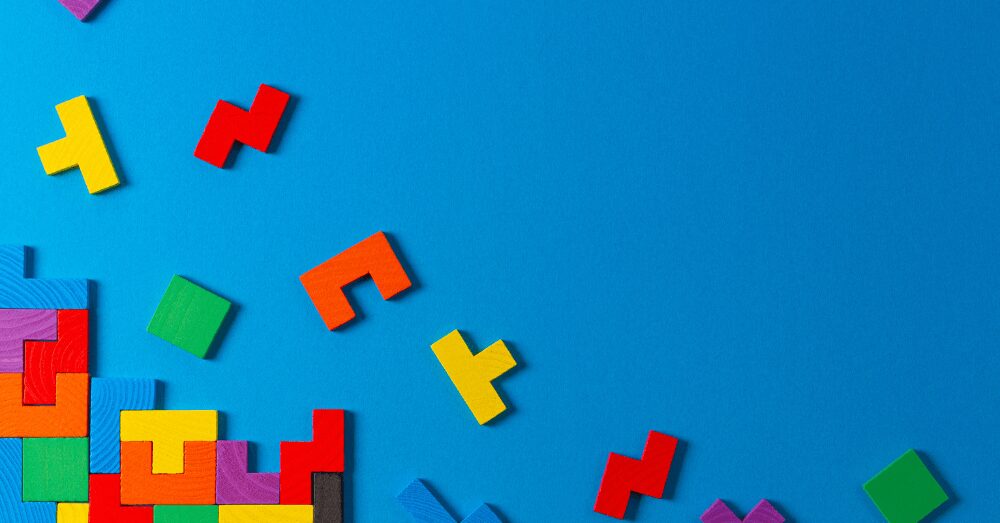
Pajitnov and Rubik’s meeting happened as part of a collaboration celebrating the Rubik’s Tetris Cube, a puzzle that combines the mechanics of a traditional Rubik’s Cube with Tetris tetromino shapes. Instead of matching solid colors, players twist and turn the cube to assemble six different tetromino patterns.
Pajitnov was genuinely starstruck, almost like a kid meeting his hero. His excitement was obvious as he shared his thoughts about what the Rubik’s Cube represents. “I would think that this cube is what people don’t appreciate in full, because I think that’s the symbol of modern civilisation,” Pajitnov said during their conversation.
A Symbol Worth Sending to Space
Pajitnov took his admiration further by suggesting the Rubik’s Cube should be included among items we send into space as evidence of human civilization. He said it would be one of ten objects he’d put on an interstellar space object, right up there with humanity’s other cultural touchstones.
His comments referenced our habit of sending cultural artifacts into space, like the golden records aboard Voyager. But the Rubik’s Cube has something those records don’t have: instant understanding. Pick one up anywhere from Budapest to Indianapolis, and you know exactly what you’re supposed to do with it. No instructions needed.
It’s “so simple and so evident,” making it “a non-competing piece,” Pajitnov explained. You don’t need batteries, screens, or manuals. Your hands and your brain are all it takes.
Why Not Tetris?
Someone naturally asked Pajitnov whether his own creation, Tetris, should get the same space treatment. His answer was surprisingly humble. Tetris is “unfortunately too complicated” because “you need to put the computer with [Tetris], user interface description and so on”.
Think about it. Tetris needs a screen, a processor, some kind of input device, and power. An alien civilization would need to figure out our technology before they could even start playing. A Rubik’s Cube? Twist it and the puzzle reveals itself immediately.
With around 500 million cubes sold worldwide, the Rubik’s Cube has already proven its universal appeal here on Earth. Hungarian professor Ernő Rubik invented the puzzle back in 1974, and it’s been scrambling brains and satisfying problem-solvers ever since.
What Great Design Looks Like
Pajitnov also touched on why puzzles matter, saying their value comes from the joy they bring rather than competition or achievement. It’s a refreshingly human take in a world obsessed with optimization and high scores.
A Rubik’s Cube doesn’t need updates, patches, or new versions to stay relevant. Its genius lies in its simplicity. Six faces, nine stickers per face, and more than 43 quintillion possible combinations. Yet anyone can understand the goal within seconds of picking one up.
Whether you’re solving it in a bedroom in Tokyo or explaining it to hypothetical aliens a thousand years from now, the puzzle speaks for itself. No language barrier, no cultural translation needed.
Should We Actually Launch One?
Is Pajitnov’s idea a fun thought experiment, or should we seriously consider it? We’ve already sent pizza, Coca-Cola, and all sorts of random stuff into space, so why not a Rubik’s Cube? It’s lightweight, durable, and represents human ingenuity in a way that’s both playful and profound.
What makes the cube special as a symbol is that it shows we’re a species that creates challenges for ourselves for the satisfaction of solving them. We don’t need a practical reason. We do it because figuring things out makes us happy. If that’s not worth preserving for future civilizations to find, what is?
Next time you pick up a cube and start twisting, remember you’re holding what one gaming legend considers worthy of representing all of humanity. Not bad for a toy that fits in your pocket.